1. Fabric Composition
Core raw material: Meta-aramid + Para-aramid + Antistatic conductive fiber, mainstream blending ratio: 93% meta aramid /5% para aramid /2% carbon conductive filament; fabric weight ranges 220–320g/m², twill or plain weave.
- Meta-aramid: Inherent flame retardant fiber, forms dense char layer under high temperature without melting or dripping, the primary heat-insulating substrate for fire protection.
- Para-aramid: High tensile & tear strength, greatly boosts fabric abrasion and impact resistance, improves overall service durability.
- Embedded carbon conductive fiber: builds uniform conductive network to dissipate static charge permanently.
2. Core Performance & Protection Mechanism
(1) Inherent Flame Resistance (No chemical coating)
Aramid features intrinsic molecular flame-retardant structure, LOI>32, non-combustible, no molten drop, self-extinguishes instantly away from fire. Under intense heat, fiber carbonizes to form an insulated barrier cutting off oxygen and heat transfer, resisting flash fire, radiant heat and molten splashes permanently; FR property never fades after repeated industrial washing.
(2) Permanent Antistatic
Carbon fiber grid discharges static electricity via corona effect, surface resistance between 10⁶–10¹¹Ω, prevents electrostatic ignition in flammable gas/dust fire sites.
(3) Extra physical performance
Excellent thermal insulation, cut resistance, tear resistance, high-temperature dimensional stability; resistant to weak acid, weak alkali and chemical splash.
3. Compliance International Standards
- EN ISO 11612: Class A1/B1/C1/D1/E1/F1 for multi-level thermal & flame protection for industrial fire hazards.
- EN 1149-5: Antistatic certification for explosive hazardous working environment.
- Optional: EN469 standard for structural firefighting uniform, EN ISO20471 high-visibility fluorescent fabric & reflective tape, NFPA 1971 for US fire service specification.
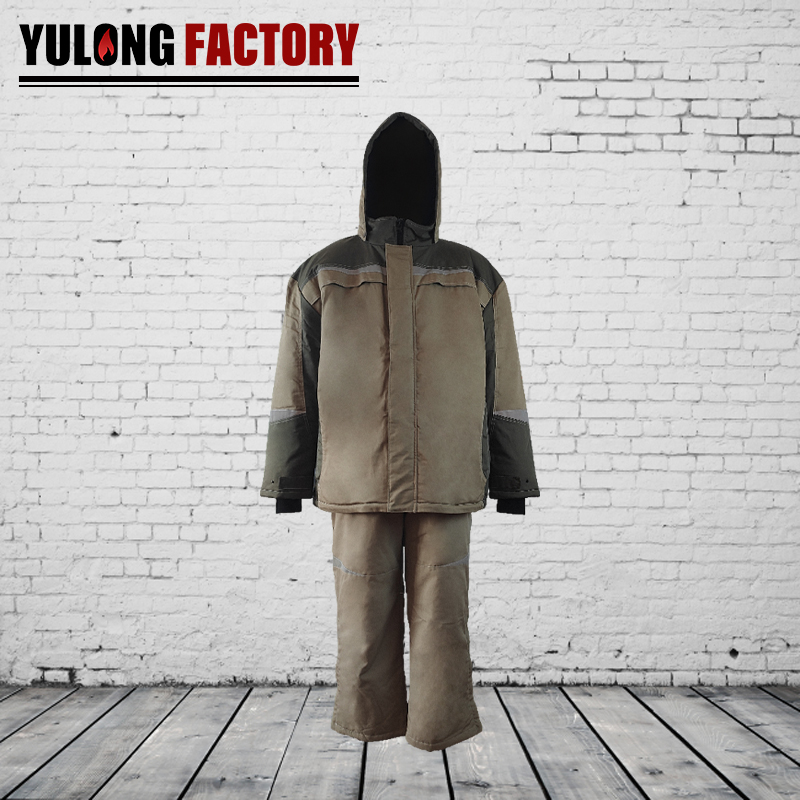
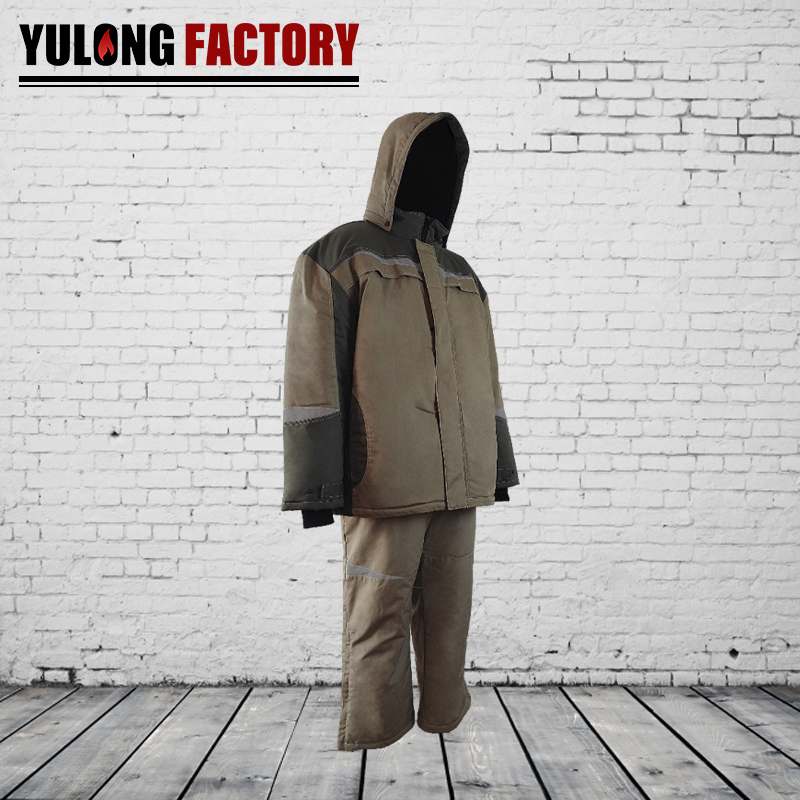
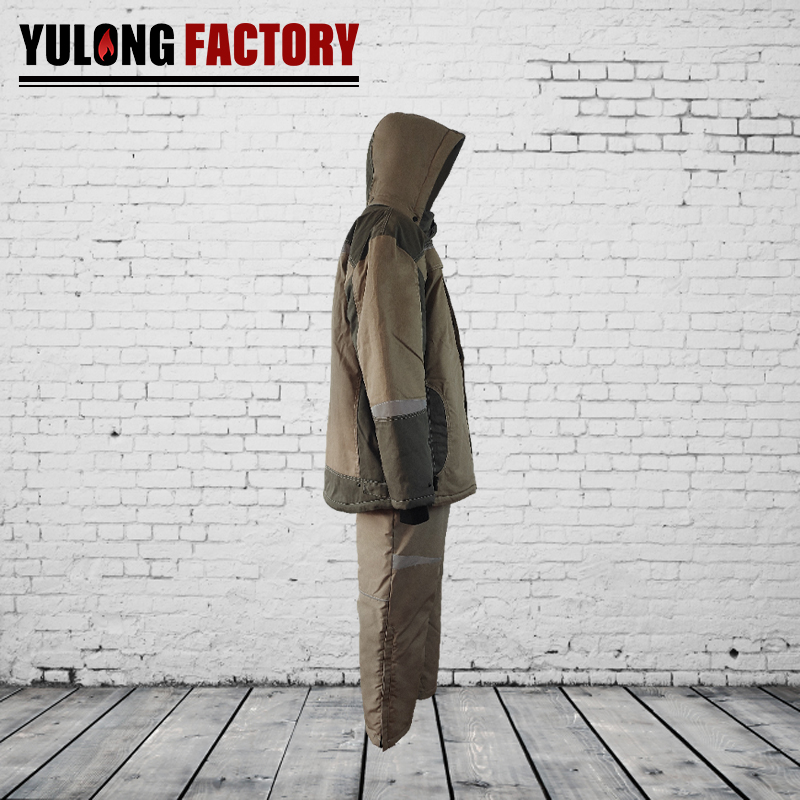
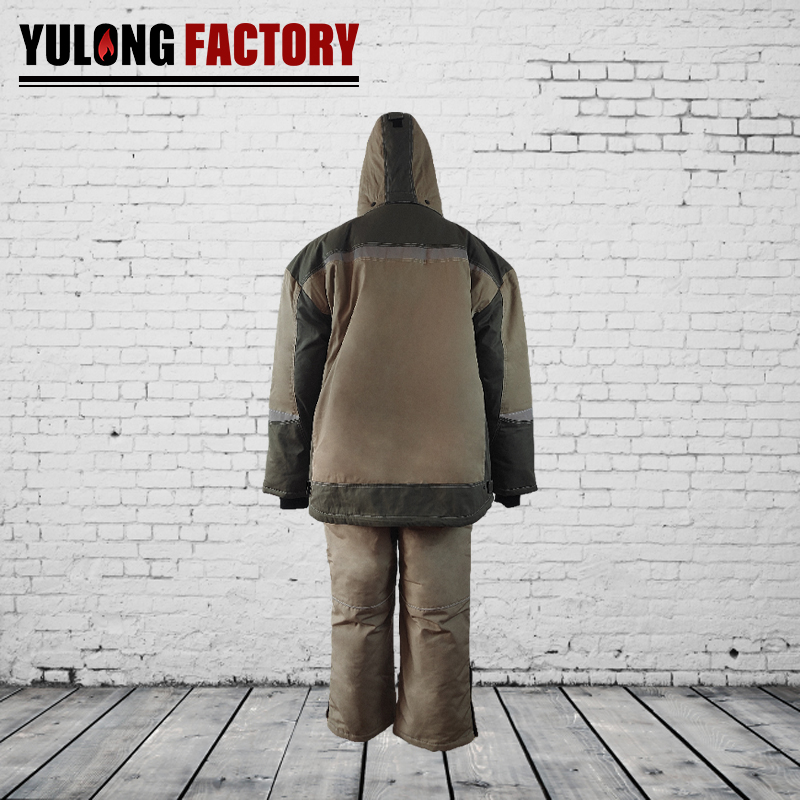
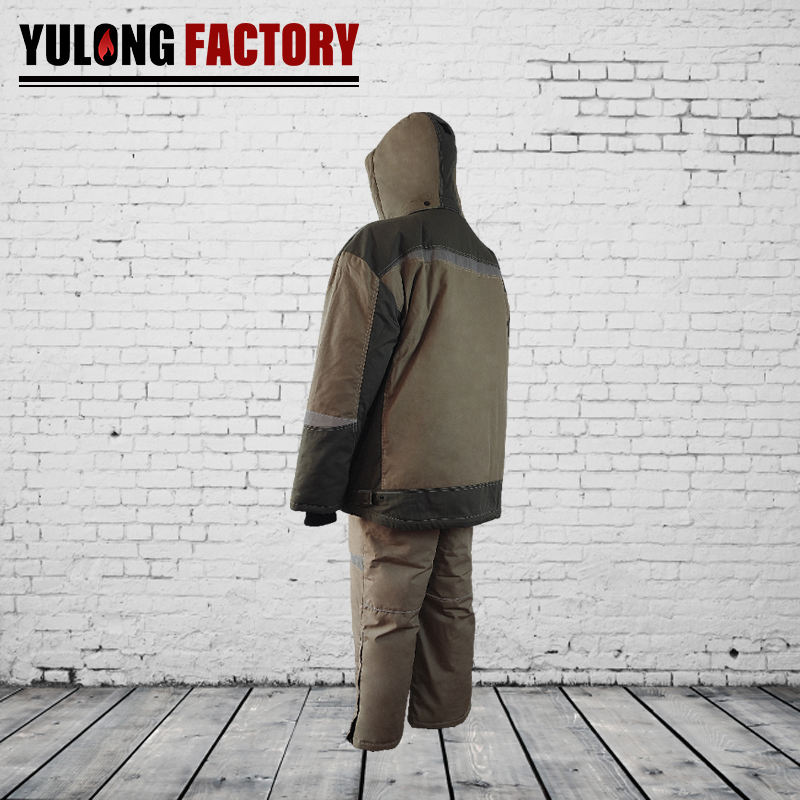
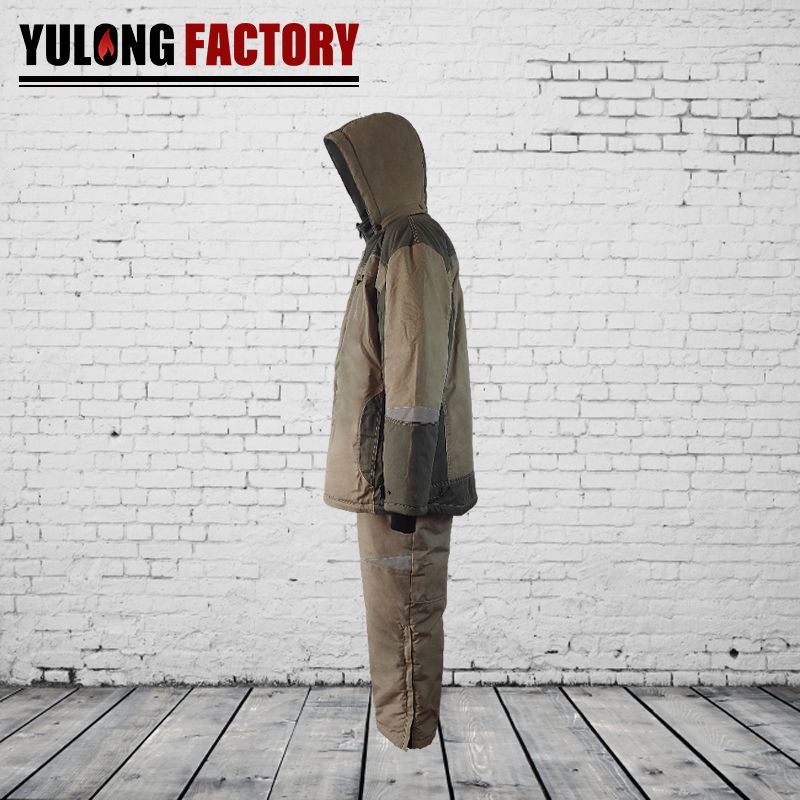
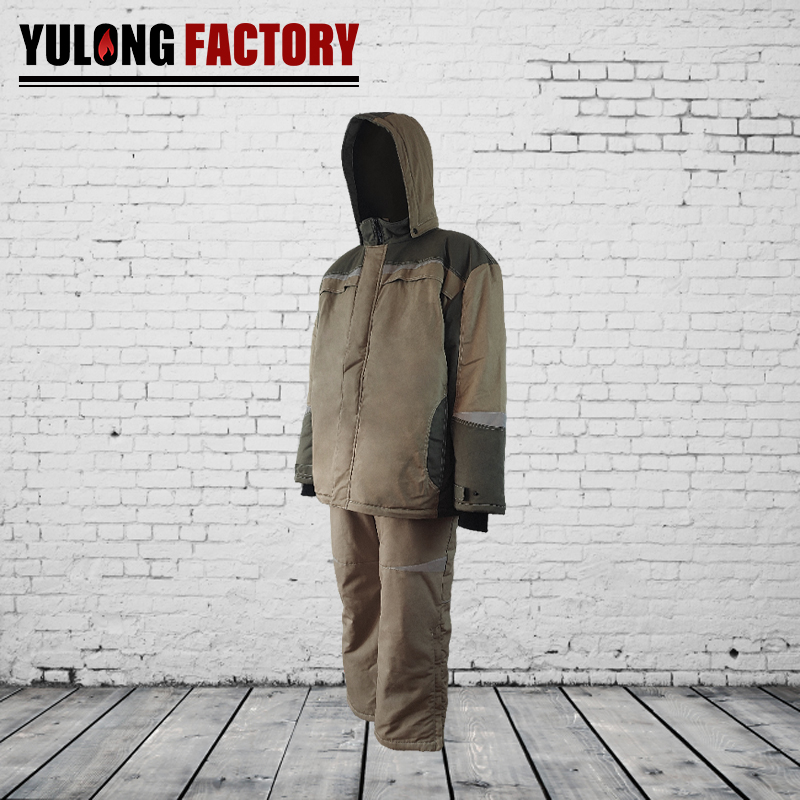
4. Garment Structure Design (Jacket + Trouser Full Set)
Jacket
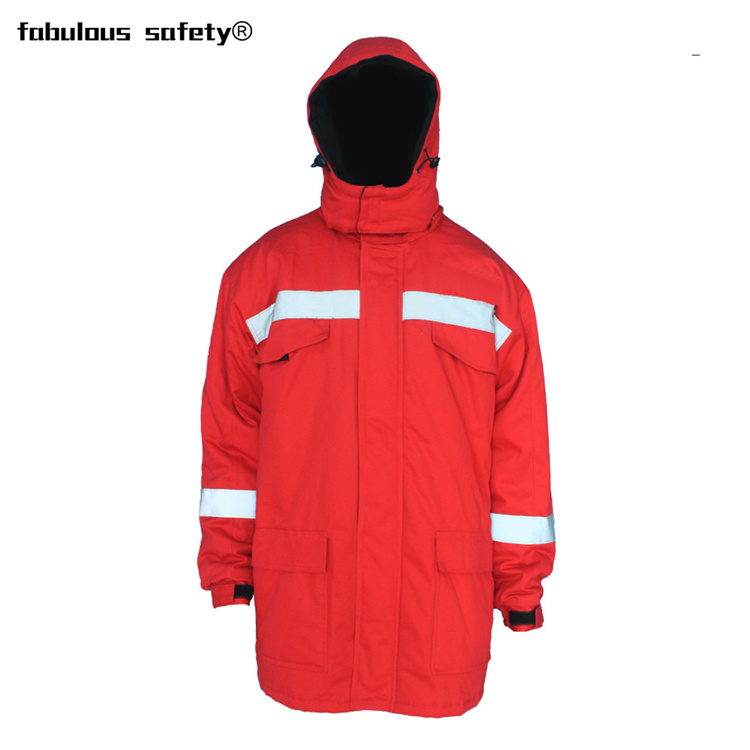
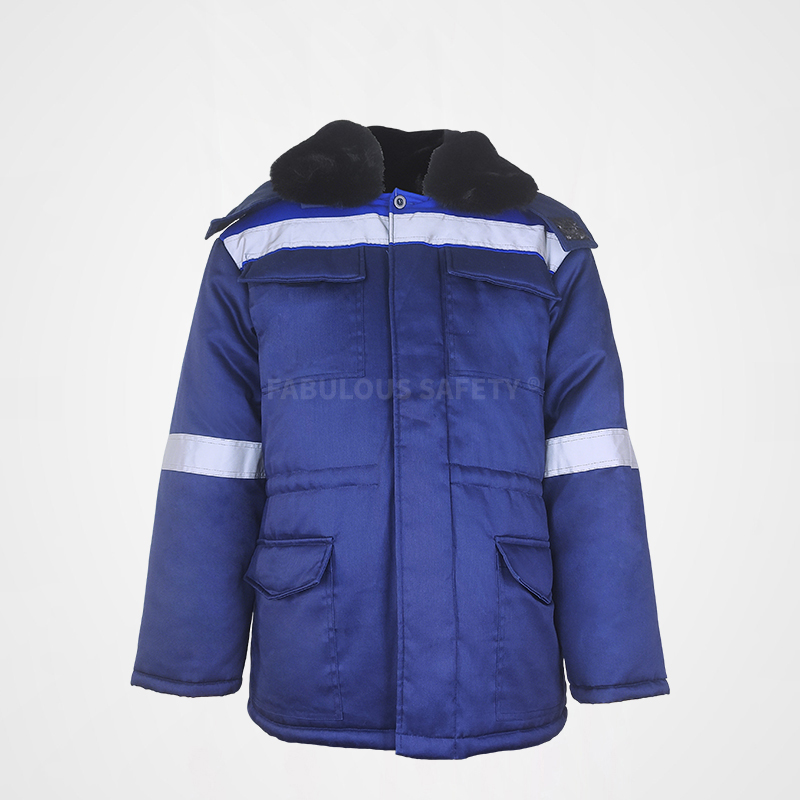
- Stand-up storm collar with sealed flap to block flame and hot gas intrusion; concealed FR snap closure, no exposed conductive metal zippers;
- Reinforced double-layer fabric on shoulder and elbow; multi-purpose chest and lower cargo pockets for fire tools; all accessories (buttons, binding, sewing thread) are aramid flame resistant;
- Adjustable cuffs with hook & loop to stop hot debris entering sleeves.
Fire Pants
- Double reinforced knee with built-in knee pad insert pocket; oversized thigh tool pockets for pliers, measuring tools; adjustable ankle cuffs;
- Entire garment stitched with high-strength aramid sewing thread to avoid seam failure under high temperature.
5. Application Scenarios
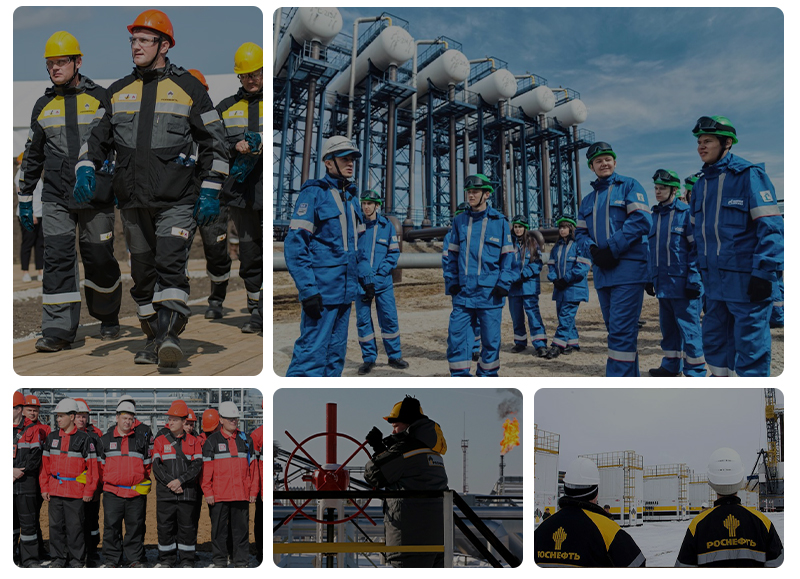
Professional fire rescue, petrochemical fire fighting, high-temperature metallurgy emergency repair, power plant fire prevention, aircraft & shipyard fire operation, hazardous chemical leakage disposal.
6. Pros & Cons
Advantages
- Permanent inherent FR & antistatic, never lose functions by frequent washing, top-grade safety among FR workwear;
- Zero molten drip under extreme high heat, highest safety level against flash fire and severe splashing;
- Outstanding mechanical strength, wear-resistant and long service lifespan.
Disadvantages
Higher material cost than CVC, TC, modacrylic blended FR fabrics; heavier fabric than conventional cotton workwear.
Foreign Trade Core Selling Phrase
Inherent Aramid FR Fire Fighting Suit, CE certified EN11612 EN1149-5, Permanent Flame & Antistatic Protection
 fireproofworkwear













Submit for consultation
We will reply to you within 24 hours